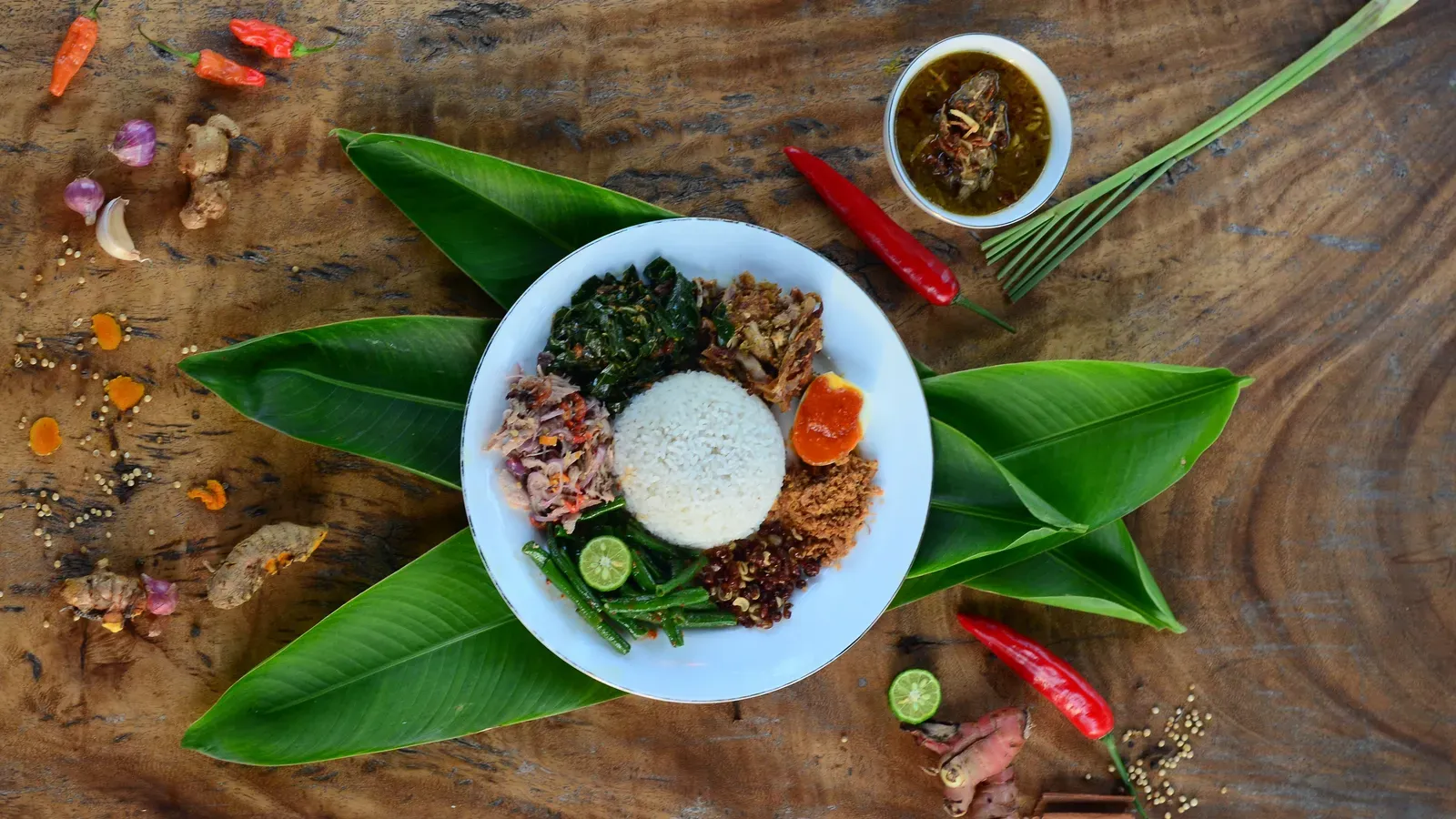
Food for curious families
Indonesian food is far bigger than “spicy or not spicy.” For a child's first taste, begin with familiar shapes—rice, noodles, soup, grilled chicken—then add new flavours one spoonful at a time. Here are 12 friendly starting points and the questions that make ordering easier.
The quick ordering kit
- Not spicy: tidak pedas.
- Sambal on the side: sambal dipisah.
- One small portion: satu porsi kecil.
- Important: “not spicy” does not mean allergy-safe. Ask about ingredients and cross-contact directly.
1. Nasi goreng
Indonesia's fried rice is a natural bridge food: recognisable, savoury, and easy to share. Versions may include egg, chicken, seafood, sweet soy sauce, pickles, crackers, and chilli. Ask for a mild version with sambal separate. A fried egg on top makes it feel like a proper event.
2. Mie goreng
These stir-fried noodles are another low-drama beginning. They can still contain chilli or a strongly seasoned sauce, so request tidak pedas. Cut long noodles for younger children and check whether seafood, peanuts, or egg are present when relevant.
3. Sate ayam
Small pieces of grilled chicken on skewers are fun to eat and simple to understand. The classic peanut sauce is often sweet-savoury, but it is obviously unsuitable for a peanut allergy and can contain chilli. Remove meat from sharp skewers for younger children.
4. Ayam goreng
Indonesian fried chicken is marinated with aromatics before cooking, so it has more flavour than plain fried chicken without necessarily being hot. Pieces can be bone-in. Pair it with rice, cucumber, and a mild vegetable dish.
5. Soto ayam
This comforting chicken soup often arrives with noodles or rice, egg, herbs, and crunchy toppings. Families can add garnishes little by little. Broth recipes vary by region and kitchen, so ask about chilli and allergens instead of assuming every pale-looking soup is mild.
6. Bakso
Springy meatballs in broth are popular and easy to portion. They may be served with noodles, tofu, greens, and sauces to add at the table. Cut meatballs for small children—they can be bouncy in more ways than one—and confirm the meat and ingredient mix if that matters to your family.
7. Gado-gado
Steamed or blanched vegetables, tofu, tempeh, egg, and rice cake come with peanut sauce. It is a useful tasting plate for confident eaters because each part can be tried separately. Request sauce on the side. This is not an option for peanut-allergic diners unless the kitchen can offer a genuinely safe alternative.
8. Tempeh goreng
Tempeh is a fermented soybean cake with a firm, nutty bite. Fried slices can be crisp and snackable, making them a friendly first taste. Some versions are glazed or cooked with chilli, so ask for a plain or mild preparation.
9. Perkedel kentang
These soft potato patties may include minced meat, herbs, or seasoning. Their familiar texture suits cautious tasters and works well beside soup or rice. Ingredients differ between kitchens, which is exactly why a quick question is useful.
10. Martabak manis
A thick, shareable sweet pancake with fillings such as chocolate, cheese, peanuts, or condensed milk. It is rich: one order can feed several people. Choose fillings together and watch for peanuts. This is dessert, despite its extremely persuasive breakfast energy.
11. Pisang goreng
Fried banana is warm, sweet, and easy to split. Batter ingredients and frying oil practices vary, so families managing allergies should ask the vendor directly. Versions with cheese, chocolate, or palm sugar can be much sweeter than the plain original.
12. Fresh tropical fruit
Mango, banana, papaya, watermelon, rambutan, mangosteen, salak, and dragon fruit can turn snack time into a tasting flight. Buy fruit that can be peeled or choose a clean, busy vendor. Durian deserves its own family vote; nobody should be ambushed by durian.
A low-pressure tasting game
Pick one safe base
Start with rice, noodles, soup, or grilled chicken that the child expects to like.
Add one explorer bite
Put a teaspoon-sized taste beside the safe food. It can be smelled, touched, or tasted without a clean-plate rule.
Describe, do not grade
Try “crispy,” “sweet,” or “new” instead of “good” and “bad.” A food can be interesting without becoming a favourite.
What about chilli?
Many Indonesian meals let diners add sambal separately, which is excellent for mixed spice levels. But chilli can also be blended into a marinade, paste, broth, or sauce. Ask before ordering and taste a small amount yourself before serving it to a young child.
Food-allergy reality check
Indonesian cooking can include peanuts, soy, egg, seafood, shrimp paste, wheat, dairy, candlenut, sesame, and shared frying oil. Names and recipes change by region and vendor. A translated allergy card can help communication, but it is not a safety guarantee. Travellers with serious allergies should make a plan with a qualified medical professional and confirm preparation directly with the kitchen.
Where should a family try these foods?
A busy food court or established restaurant gives first-time visitors time to look at options, find seating, wash hands, and order from several counters. Street stalls can be wonderful, but choose places with steady turnover and food cooked fresh. Start early, before hunger turns every decision into a constitutional crisis.
Editorial note: Recipes and spice levels vary across Indonesia. This research-led guide offers starting points, not allergy or food-safety guarantees.
Reviewed July 2026 by the Rank Asia editors.